Klasse Malerei
| Heigth | 160 cm |
|---|---|
| Width | 135 cm |
| Length/Depth | 1 cm |
Mixed-Media auf Leinwand
Technik:
Malerei
Versand:
Die Arbeit wird aufgespannt auf einem Keilrahmen versendet – inklusive Echtheitszertifikat und Signatur auf der Rückseite.
Concept:
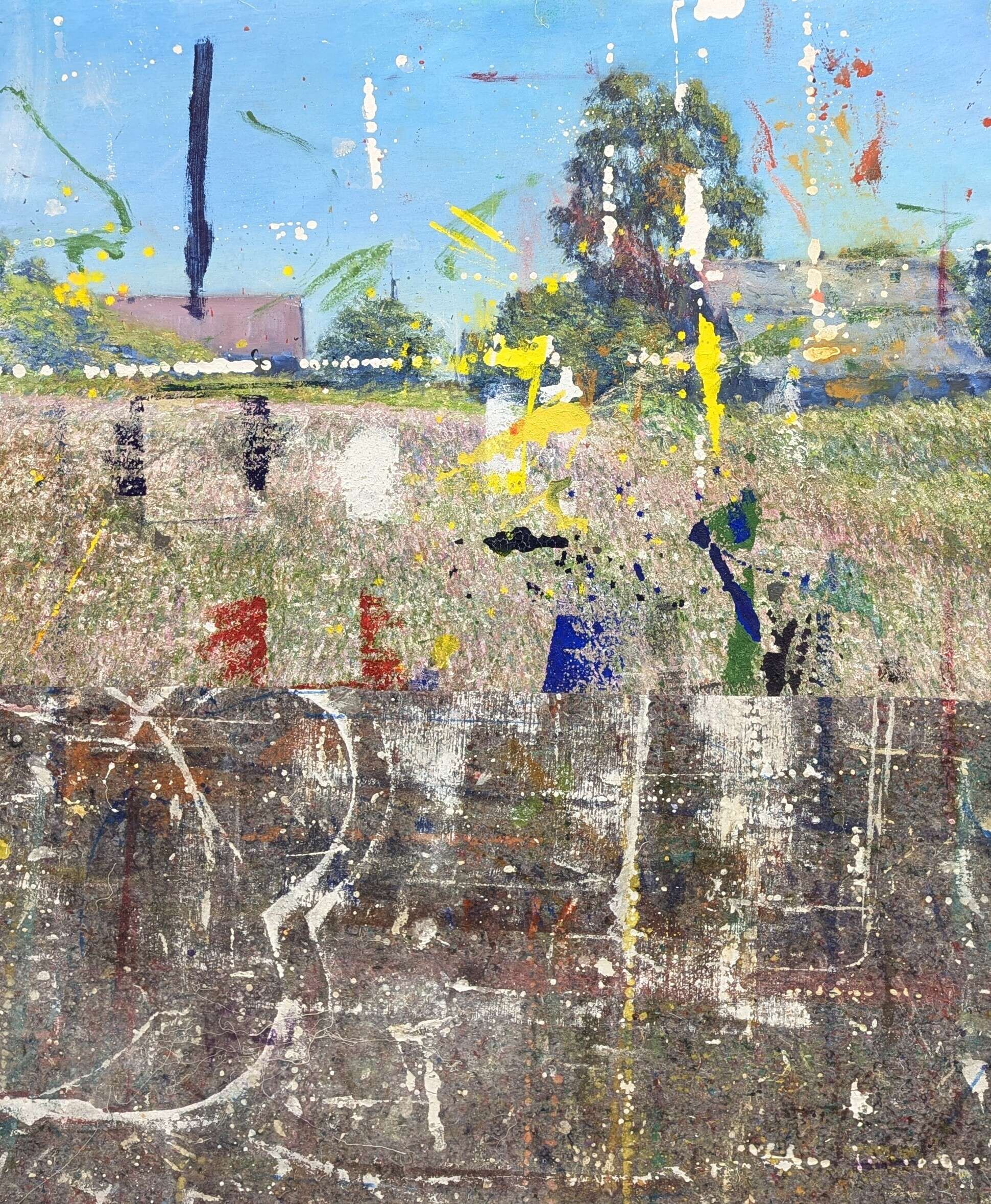
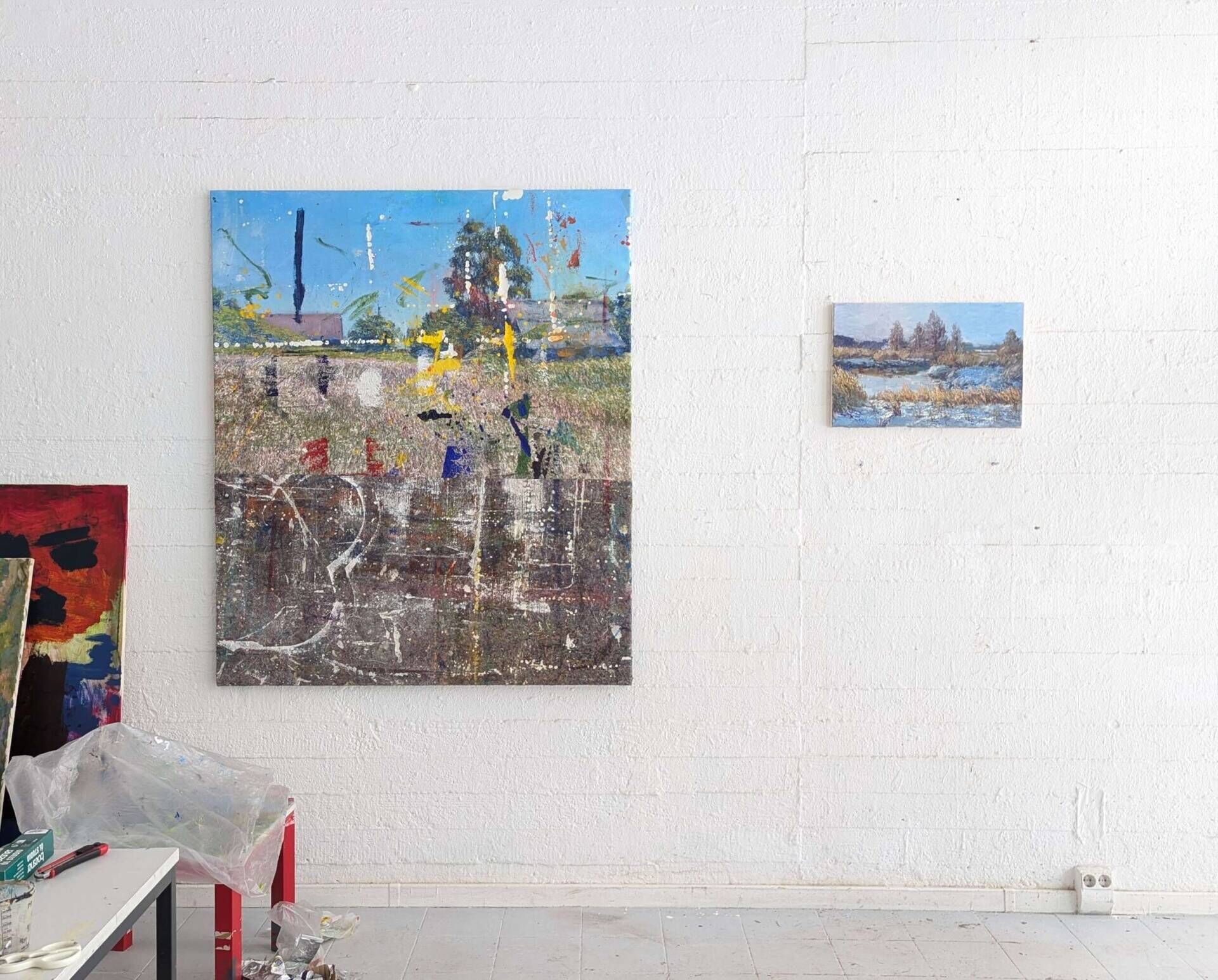
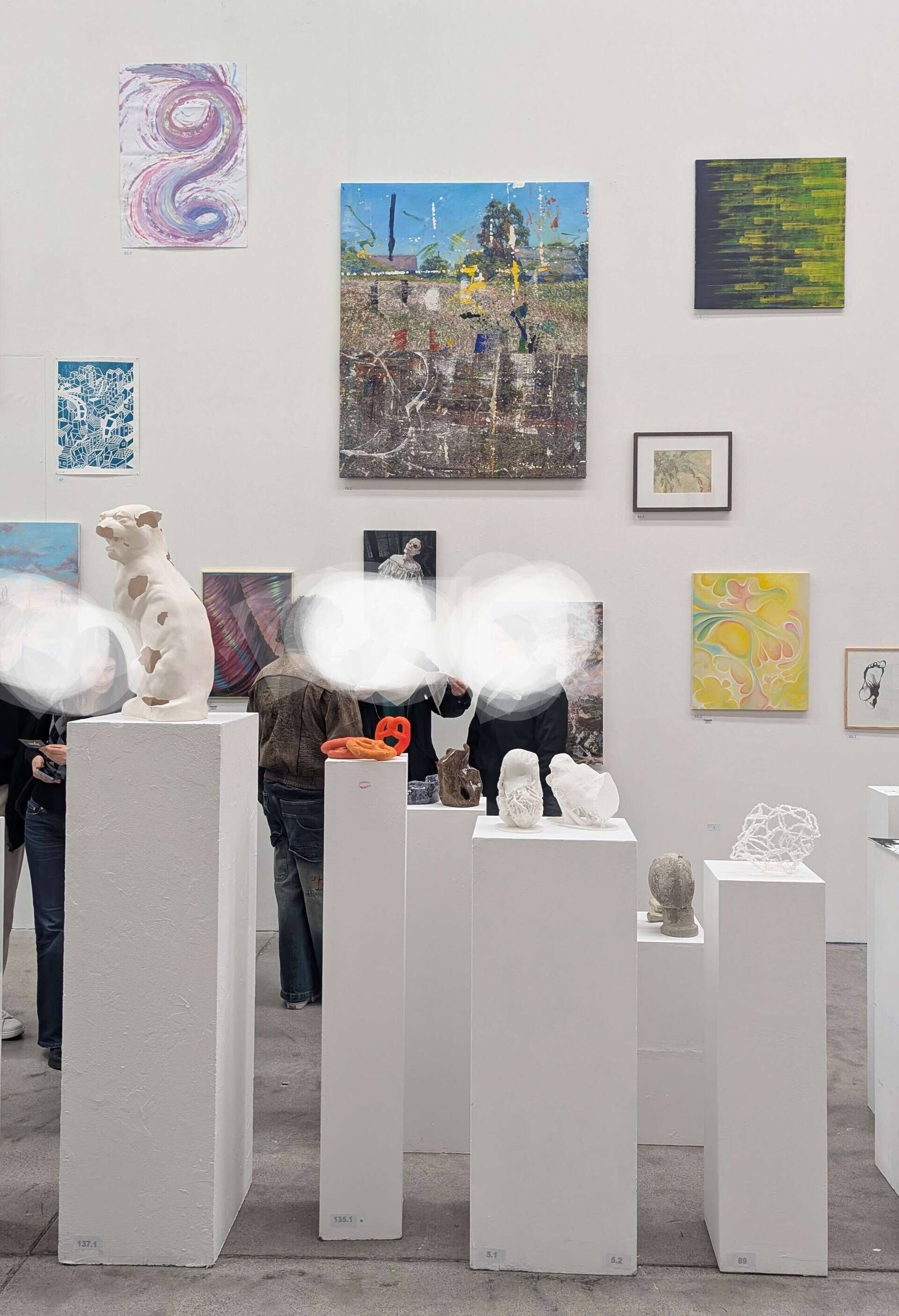
This painting continues a series of works examining the medium’s relevance in contemporary art: Schnee von Gestern, -20 €⁰, Breadpainting and Rawdogging a Painting. Like them, it addresses questions of authorship, agency, free will, originality, and work.
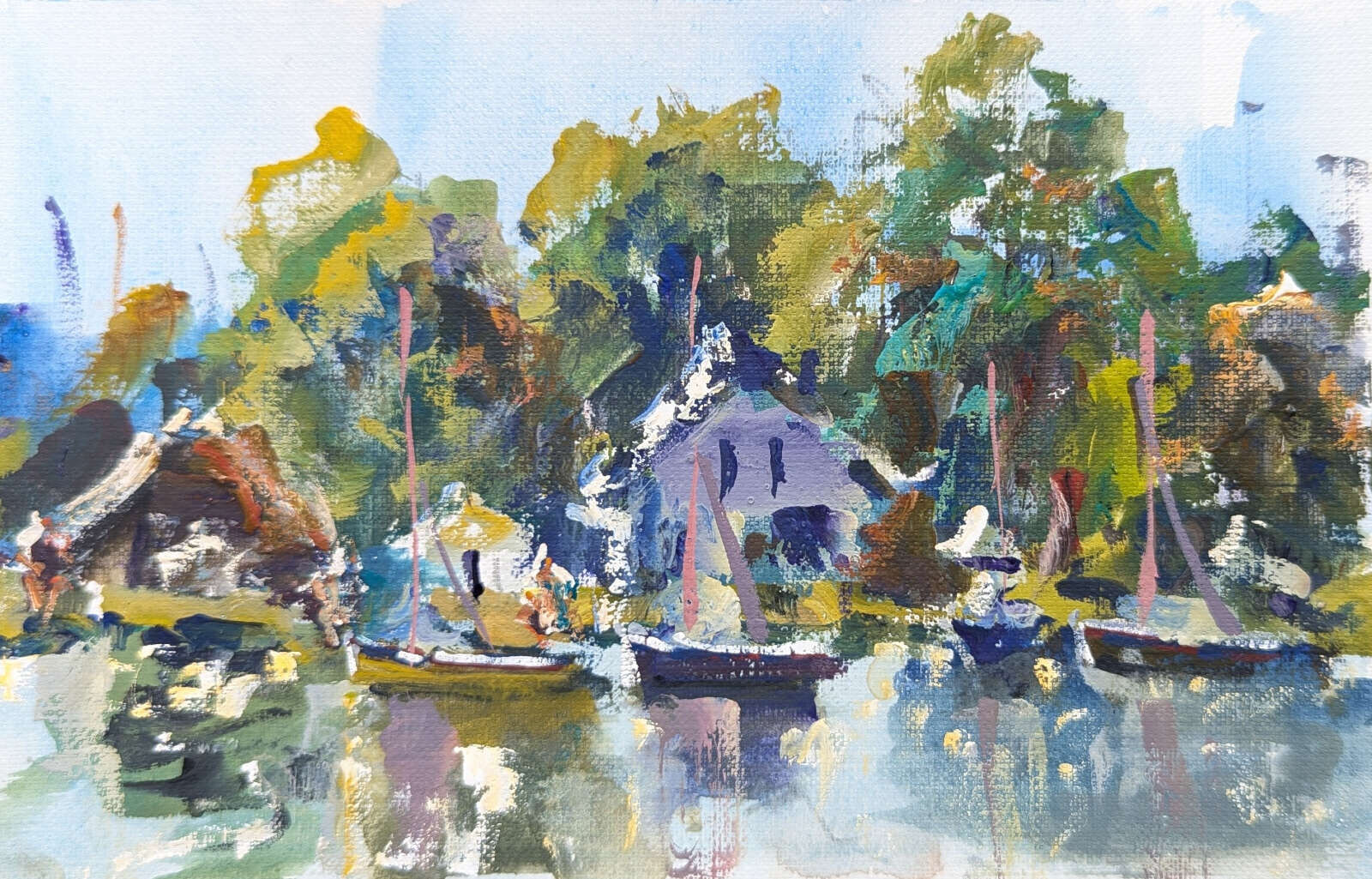
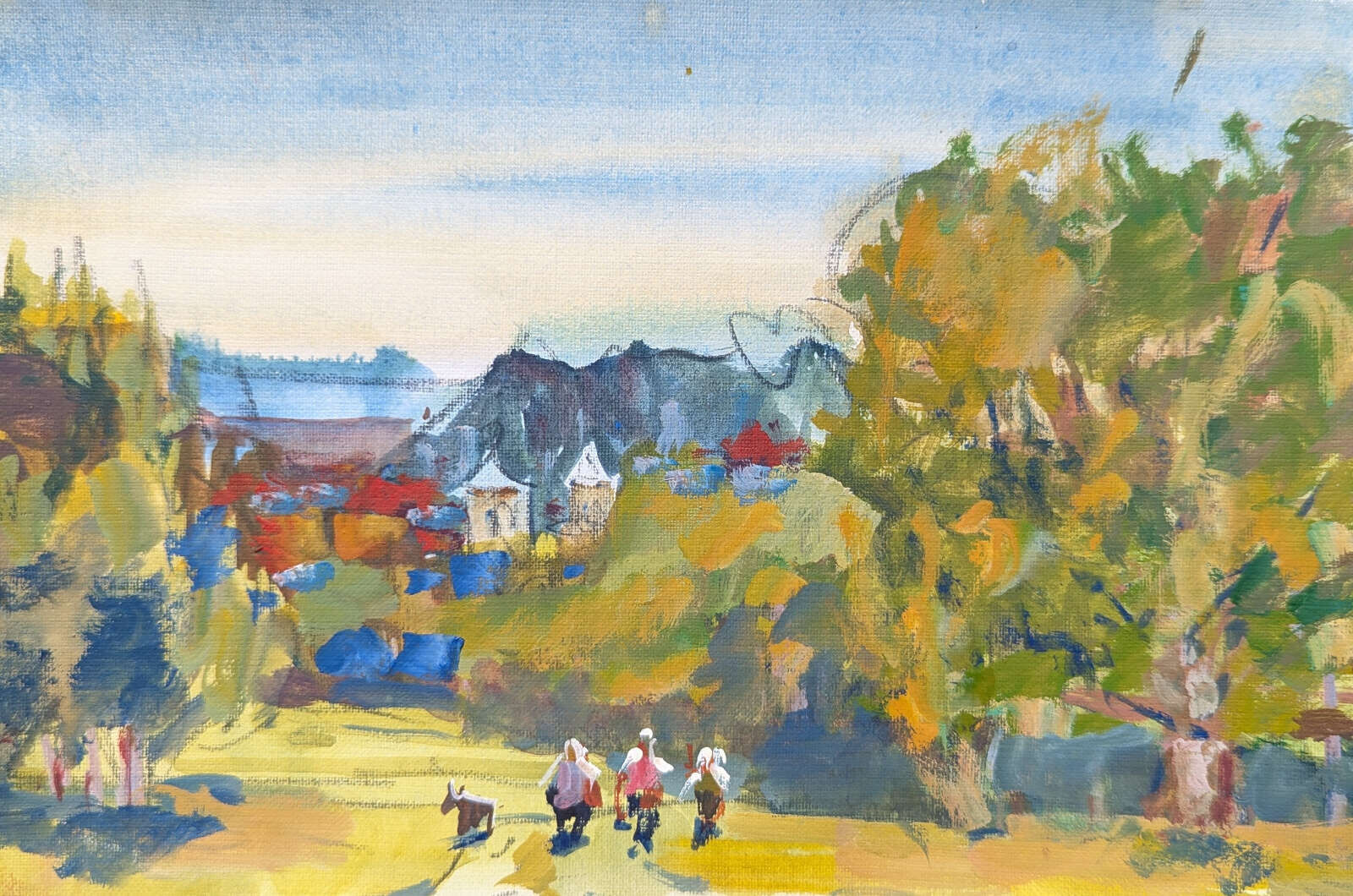
The upper section of the artwork is an original landscape, typical of its genre and picturesque origin – a desublimation of the urban longing for land. To own a landscape painting is to vicariously own land, but free from obligations that come with the possession of an actual property. The scene appears abandoned, a type of ruin: run-down barns, plot overgrown with wildflowers and hay. It shows the effects of environmental agency. The scene presents a mystery, aligning with W. J. T. Mitchell’s interpretation of a picturesque landscape as a found object.
A found object itself, to qualify as such, must be ordinary and must be found accidentally, without seeking. The painting as a contemporary art medium can be relevant only by being a found object.
The landscape also embodies what I call the workers’ sublime – the awe at the amount of sheer labor embedded in the work: the detail, the craft, the time. This effect is amplified by the zero-sum shock of witnessing its “spoilage” through paint smudges. The landscape in this case is a double ruin.
The lower section is a found object proper – a painter’s fleece used in a studio to protect floors and tables from paint and primer. Discarded as a byproduct of the art-making process, it nevertheless possesses, in my view, aesthetic qualities that surpass those of intentional artworks. This reframes art-making through Jon Elster’s notion of states that are essentially by-products – something that only occurs as a result of actions taken for other purposes, and cannot be intentionally created because attempting to do so prevents the state from being achieved.
To have both processes present in a single work, I left the landscape in a studio where painting workshops regularly take place. I wanted the people using the space to treat the canvas as protective covering. After nearly a year, however, there was little progress. People were self-conscious. The smudges and marks were sparse and unconvincing. The opposite happened – the landscape, being recognized as art, lost its capacity to become a by-product.
To make it evident I stitched the canvas together with a real painter’s fleece, exposing the clash between the agency of an autonomous artist and the agency of a subjugated environment. The resulting simultaneous contrast invites a duck‑rabbit paradigm shift in perception, challenging assumptions about work, artwork, freedom and originality.
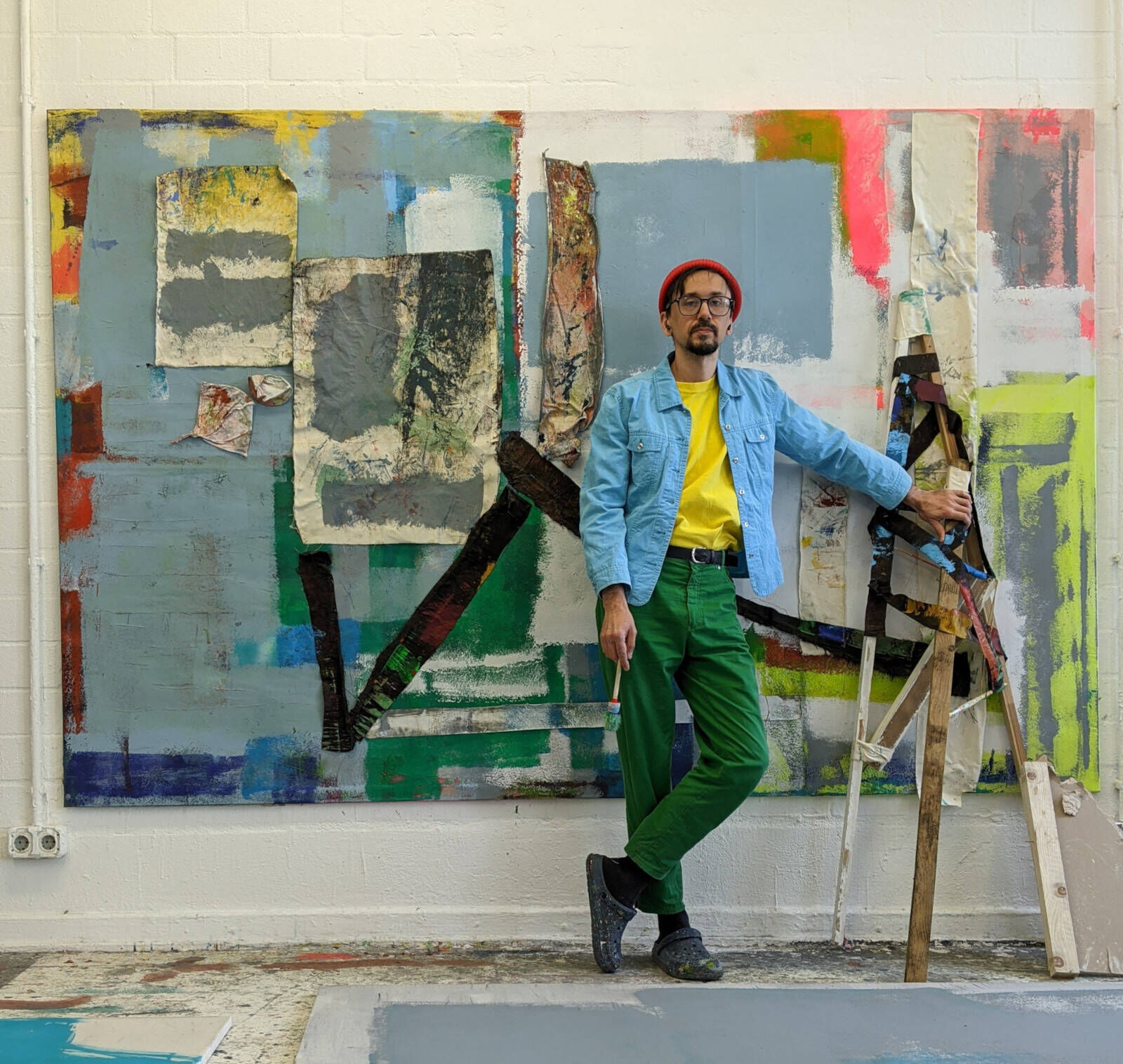
Genady Arkhipau
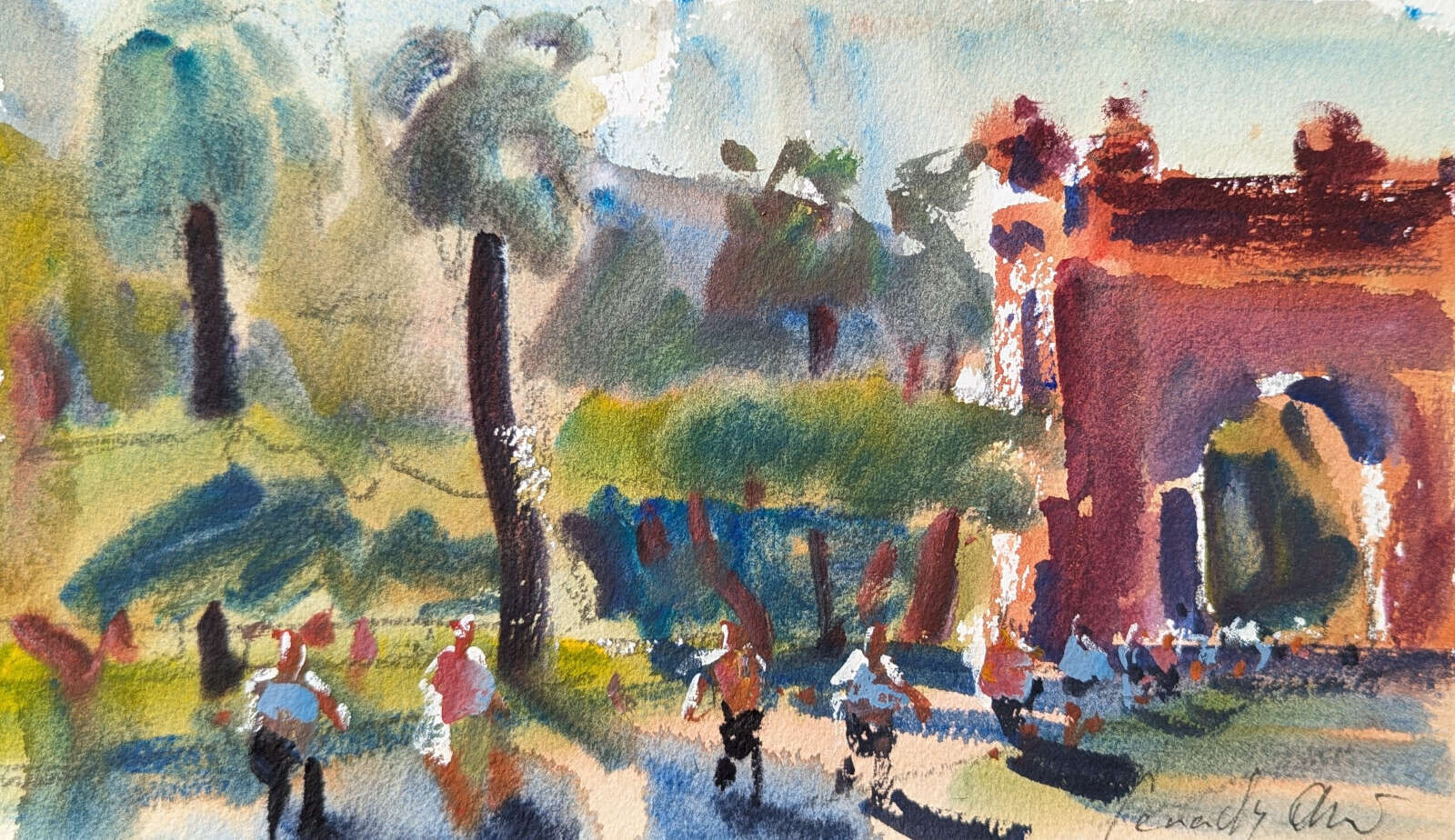
Before studying contemporary art, he was a traditional painter and worked with galleries in the USA and Belarus. His paintings won numerous awards, were published in magazines and anthologies, and were exhibited, among other places, in the Salmagundi Club and the National Arts Club in New York, and the State Museum of Pennsylvania.
Jan. 28, 2026 – March 22, 2026—Group exhibition for the Kunst am Bau-Projekt der neuen Feuer- und Rettungswache Wolfsburg, Städtische Galerie Wolfsburg, Wolfsburg, Germany
February 2026—MOSI Residency, Braunschweig, Germany
April 2026—Art Mediation project "Let's Take it Outside" in Goslar, Germany